SAD – DIED AT 71!
In the history of American broadcast journalism, few voices have been as quietly influential as Bob Edwards. For decades, he helped define what serious.
Thoughtful journalism could sound like in the early hours of the morning—measured, intelligent, and deeply respectful of the audience.
At a time when the media landscape increasingly rewards volume, urgency, and outrage, Edwards built a legacy on something far rarer: trust. Bob Edwards is best known as the founding host of Morning Edition on National Public Radio, a program that went on to become one of the most listened-to news broadcasts in the United States.
When the show first aired in 1979, NPR itself was still finding its footing. The idea that a calm, in-depth, interview-driven morning news program could compete with commercial radio seemed, to many, unrealistic.
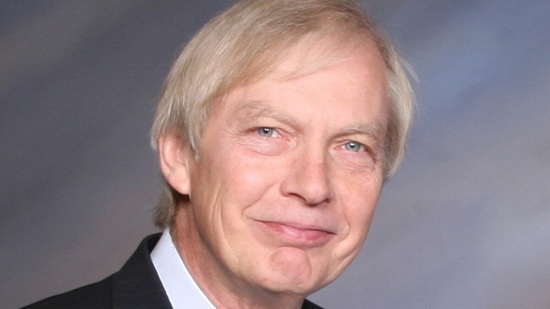
Edwards proved otherwise—not through spectacle, but through consistency, discipline, and an unwavering belief in the intelligence of listeners.
From the very beginning, his presence set the tone. Edwards did not shout headlines or rush through stories. He spoke with precision and restraint, allowing complex issues to unfold naturally.
His voice carried authority without arrogance and warmth without artificial sentiment. It was the sound of someone who had done the work, respected the facts, and trusted the audience to do the thinking.
For millions of listeners, Bob Edwards became part of the rhythm of daily life. His voice entered kitchens before dawn, accompanied long commutes, and provided context during moments of uncertainty.
Elections, wars, economic shifts, cultural debates, and moments of national tragedy all passed through his microphone. He treated each subject with the same seriousness, guided by a belief that journalism’s primary responsibility is not to provoke, but to inform.
What distinguished Edwards most was not simply his delivery, but his approach to conversation. He understood the power of silence. He knew when to press and when to step back.

Rather than interrupting guests or forcing conclusions, he allowed answers to develop fully—even when they were uncomfortable or incomplete.
This patience was not accidental. It reflected a philosophy that journalism should illuminate rather than dominate.
In an industry often driven by speed, Edwards valued preparation above all else. Colleagues frequently described him as meticulous and disciplined.
He read extensively, researched relentlessly, and arrived at each interview with a deep understanding of his subject.
This was not done to showcase expertise, but to ask better questions. His preparation was a form of respect—for the guest, for the listener, and for the craft itself.
That respect extended to his audience. Edwards never spoke down to listeners or assumed their attention needed to be earned through theatrics.
He believed that facts, when presented clearly and honestly, were compelling on their own. This belief ran counter to prevailing trends, yet it proved enduring.

Over time, Morning Edition became a cornerstone of public radio, and Edwards became one of the most trusted voices in American media.
Trust, in Edwards’ case, was not a branding strategy. It was something he earned incrementally, broadcast by broadcast, question by question. He did not chase attention or controversy.
He avoided sensationalism, even when it would have been easier or more profitable. Instead, he allowed credibility to accumulate slowly, knowing that once established, it carried lasting value.
His influence extended far beyond the programs he hosted. Generations of journalists learned by listening to him. They studied how he framed questions, how he handled sensitive topics, and how he maintained firmness without hostility.
Edwards demonstrated that it was possible to be skeptical without being cynical, and probing without being cruel. In doing so, he quietly reshaped expectations for broadcast interviews.
Even after leaving Morning Edition in 2004, Edwards remained an active and respected presence in journalism. He continued hosting The Bob Edwards Show, where he maintained the same standards that had defined his earlier work.
Free from the constraints of traditional broadcast schedules, he leaned even further into long-form conversation, reinforcing his belief that depth and patience were not outdated values, but essential ones.

Outside the studio, Edwards was known as a private individual who placed little value on celebrity. He focused on ideas rather than personal publicity, preferring substance over spectacle in both his professional and personal life.
He read widely, remained intellectually curious, and approached journalism not as a performance, but as a discipline—one that demanded humility as much as skill.
As the media environment evolved, Edwards’ approach increasingly stood in contrast to dominant trends. The rise of opinion-driven programming, algorithmic incentives, and constant breaking news cycles shifted attention away from reflection and toward immediacy.
Yet rather than appearing outdated, Edwards’ work gained new relevance. His career served as a reminder that speed does not equal insight, and that seriousness does not require hostility.
Many of the values Edwards embodied—clarity, patience, fairness, and respect—are often discussed in abstract terms within journalism. Edwards made them concrete.
He demonstrated, day after day, what it looked like to practice those principles in real time, under real pressure, with real consequences. His work showed that ethical journalism is not defined by slogans, but by habits.
The gratitude expressed by listeners over the years speaks volumes. People did not merely consume his broadcasts; they relied on them.
In moments of confusion or crisis, his presence provided a sense that someone careful and capable was paying attention. That sense of steadiness is difficult to quantify, but deeply felt. It is also increasingly rare.
Bob Edwards’ legacy is not confined to archives or recordings. It lives on in the standards he set and the journalists he influenced.
His career stands as proof that credibility, once earned honestly, endures—even as platforms change and formats evolve. He showed that journalism can be rigorous without being exhausting, serious without being cynical, and authoritative without being domineering.
In a fragmented media landscape, Edwards represented coherence. He reminded audiences that news could be a public service rather than a constant provocation.
He understood that behind every story were real people, and he never lost sight of that responsibility. That understanding shaped not only how he reported the news, but how he listened.
Voices like Bob Edwards’ are not easily replaced, because they are not manufactured. They are built slowly, through discipline, restraint, and an unwavering commitment to doing the work properly—even when it is harder, slower, or less immediately rewarding.
His career offers a counter-narrative to the idea that journalism must sacrifice depth for relevance.
Whether one listened daily or only occasionally, the impact of his work is undeniable. His calm cadence, thoughtful questions, and ethical consistency helped define an era of public radio and left a lasting imprint on American journalism. Long after specific broadcasts fade from memory, the standard he set remains.
Bob Edwards’ contribution is ultimately an ethical one. He reminded both journalists and audiences that the goal of news is not domination, but understanding. Not volume, but reliability.
Not performance, but service. In a time when credibility is constantly tested, his career stands as enduring evidence that trust, earned patiently and protected carefully, still matters.

![What Is SPAM Made Of?- The Answer Might Surprise You]](https://indexonline.site/wp-content/themes/hueman/assets/front/img/thumb-medium-empty.png)