BREAKING — SUPER BOWL SUNDAY MAY HAVE A NEW RIVAL And it’s already pulling hundreds of millions of views across social media as the rumors spread.007
Super Bowl Sunday, long considered America’s most untouchable media throne, may be facing an unexpected challenger rising far beyond the stadium lights.
Across social media platforms, whispers have turned into roars around what is being called
Céline Dion’s “All-American Halftime Show,” a rumored broadcast already igniting massive online attention.
What makes the story combustible is not just the name attached, but the positioning of the event itself, which is being framed as something intentionally built
outside the NFL’s ecosystem.
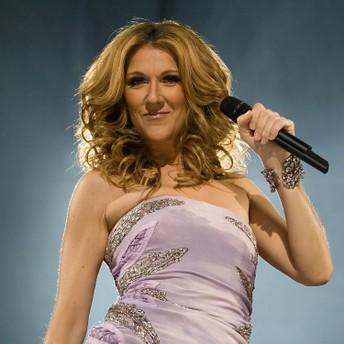
According to viral threads circulating on X, TikTok, and Instagram, this project is not affiliated with the official Super Bowl broadcast in any capacity.
It is reportedly not sponsored by league partners, not produced by network television, and not bound by the commercial architecture that defines Super Bowl Sunday.
Instead, online chatter describes it as a parallel cultural moment, designed to run alongside the game rather than challenge it head-on.
Yet insiders and fans alike are asking the same question in growing unison: can something exist next to the Super Bowl and still steal its oxygen?
The rumors began quietly, with a handful of cryptic posts hinting at late-night rehearsals and closed-door musical run-throughs.
Short video clips, allegedly leaked from private sessions, began surfacing with orchestral backdrops, patriotic imagery, and gospel-tinged vocal arrangements.
Within hours, speculation escalated into a full-blown digital wildfire, pulling hundreds of millions of views across platforms.
The phrase “for the people” appeared repeatedly in captions, comments, and reposts, signaling a narrative deliberately distinct from corporate spectacle.
Fans noticed that the language surrounding the rumored show leaned heavily into faith, unity, and national healing rather than branding and sponsorship.
That contrast alone was enough to trigger comparisons to the NFL’s heavily commercialized halftime tradition.

Céline Dion’s name added further gravity to the speculation, given her rare public appearances in recent years and her symbolic cultural stature.
For many Americans, Dion represents not just vocal excellence, but emotional endurance, spiritual resolve, and cross-generational trust.
The idea of her leading a faith-tinged, unity-driven broadcast on the country’s biggest media day struck a deeply resonant chord.
Online supporters began framing the project as an “alternative halftime,”
even though no official confirmation has been issued.
Critics, meanwhile, questioned whether such a concept could realistically draw attention away from football’s most sacred ritual.
Media analysts noted that the disruption may not come from competition, but from fragmentation of attention.
Super Bowl Sunday is no longer a single-screen event, but a multi-device, multi-platform cultural marathon.
In that environment, a simultaneous broadcast does not need to replace the halftime show to redefine it.
It simply needs to exist convincingly enough to split focus.
According to multiple viral narratives, the rumored show would be streamed freely online rather than gated behind television rights.
That alone would represent a seismic departure from how Super Bowl-adjacent content has traditionally been consumed.
Supporters argue that removing paywalls, ads, and sponsorship logos could make the event feel more intimate and human.
They describe it not as entertainment designed to sell, but as a moment designed to gather.
The timing of the rumor has only intensified interest, arriving during a period of cultural fatigue and political polarization.
Commenters repeatedly describe the concept as “healing,” “grounding,” and “necessary,” regardless of its factual status.
Skeptics warn that viral rumors often collapse under scrutiny, especially when no official statements are issued.
Yet the silence itself has become part of the intrigue.
Neither Dion’s representatives nor major networks have publicly denied the project’s existence.
That absence of denial has fueled further speculation, theories, and amateur investigations.
Some fans claim the secrecy is intentional, designed to avoid legal pressure or premature shutdowns.
Others believe the entire narrative may be a social experiment or symbolic movement rather than a literal broadcast.
Still, leaked rehearsal chatter continues to circulate, describing large choirs, stripped-down staging, and minimal visual effects.

The alleged emphasis is on voice, message, and shared emotion rather than pyrotechnics.
That creative direction stands in stark contrast to the spectacle-first model dominating modern halftime shows.
If true, it would represent a return to performance as communion rather than consumption.
Cultural historians note that moments of national tension often produce counter-programming rooted in values rather than novelty.
From wartime broadcasts to post-crisis concerts, America has a long history of parallel cultural rituals.
This rumored event is being framed by supporters as the latest evolution of that tradition.
What makes it different is the scale of the digital ecosystem now capable of amplifying it instantly.
A single livestream, if timed correctly, could rival network ratings within minutes.
That possibility alone explains why the rumor has unsettled industry insiders.
Advertisers, networks, and league executives are reportedly monitoring the conversation closely.
Even unconfirmed, the idea has already shifted the narrative around Super Bowl Sunday.
It has introduced the notion that cultural gravity no longer belongs exclusively to institutions.
Whether the “All-American Halftime Show” materializes or not, its impact is already measurable in discourse alone.
For now, Super Bowl Sunday remains undefeated.
But for the first time in years, America’s biggest media day may not belong to just one stage.