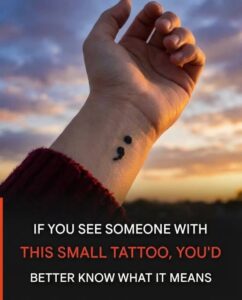
The Meaning Behind the Semicolon Tattoo and Its Message of Hope
Tattoos have long served as powerful forms of personal expression. For some people, they represent memories, cultural identity, or artistic taste. For others, they symbolize moments of transformation or survival. Among the many tattoo symbols that have gained global recognition, one of the most meaningful is surprisingly simple: the semicolon.
At first glance, a semicolon tattoo might look like nothing more than a small punctuation mark. It’s minimal, often discreet, and easy to overlook. Yet behind this tiny symbol lies a deeply emotional message shared by millions of people around the world.
The semicolon tattoo has become a symbol of resilience, perseverance, and hope. It represents the idea that even when life feels overwhelming, the story isn’t over. Just as a writer uses a semicolon to continue a sentence instead of ending it, individuals who wear this tattoo are choosing to continue their own stories despite hardship.
Over the past decade, the semicolon tattoo has grown into a global movement tied closely to mental health awareness. For those who wear it, the mark serves as a reminder of survival, strength, and the importance of continuing forward. It has helped start conversations about mental health, reduce stigma, and create a sense of solidarity among people who have faced emotional struggles.
In this article, we will explore the full meaning behind the semicolon tattoo, how the movement began, why it resonates with so many people, and how such a small symbol has created a powerful message of hope across the world.
The Symbolism of the Semicolon in Writing
To understand the meaning behind the semicolon tattoo, it helps to start with its original role in writing.
A semicolon is a punctuation mark used to connect two closely related sentences or ideas. It signals a pause—stronger than a comma but not as final as a period. When a writer chooses to use a semicolon, they are deciding that the sentence should continue rather than end.
In simple terms, the semicolon represents a moment where something could stop, but the author chooses to keep going.
This concept became the foundation of the tattoo’s symbolic meaning. In the context of life, the “author” represents the individual person. Life may present moments where the story feels like it could end—times of deep struggle, emotional pain, or uncertainty. But choosing a semicolon means choosing continuation instead of closure.
For many people, this metaphor resonates deeply.
It transforms a punctuation mark into a powerful reminder that their story is still unfolding. Life may pause. It may become difficult or uncertain. But it does not have to end there.
The Origins of the Semicolon Tattoo Movement
The semicolon tattoo did not appear randomly as a popular trend. Its widespread recognition can be traced back to a mental health awareness initiative known as Project Semicolon.
Project Semicolon was founded in 2013 by Amy Bleuel, an advocate for mental health awareness who wanted to create a symbol of hope for people struggling with depression, anxiety, self-harm, addiction, and suicidal thoughts.
Bleuel was inspired by her own experiences with mental health challenges and the loss of her father to suicide. She wanted to create something simple yet powerful—something that could remind people that their lives were worth continuing.
The semicolon became the perfect symbol.
The message behind the movement was simple but profound:
Your story is not over.
What began as a small online campaign quickly gained momentum across social media. People started drawing semicolons on their wrists, sharing their stories, and encouraging others to speak openly about mental health.
Soon after, many individuals chose to make the symbol permanent by getting semicolon tattoos.
What started as a grassroots awareness effort grew into a global symbol recognized across communities, cultures, and generations.
Why the Semicolon Tattoo Resonates with So Many People
The popularity of the semicolon tattoo is not just about aesthetics. Its emotional resonance comes from how many people can relate to the message behind it.
Mental health struggles are far more common than many realize. Millions of people experience periods of depression, anxiety, grief, trauma, or emotional distress at some point in their lives.
Yet historically, conversations about mental health were often surrounded by stigma or silence.
The semicolon tattoo helped change that.
By wearing the symbol, individuals signal that they have faced challenges and chosen to continue their journey. The tattoo becomes both a personal reminder and a message to others who may be struggling.
Many people who choose this tattoo do so because they have:
- Overcome depression or anxiety
- Survived suicidal thoughts
- Recovered from addiction
- Experienced trauma or loss
- Supported loved ones facing mental health challenges
For each person, the story behind the tattoo is unique. But the core message remains the same: life continues, even after the hardest chapters.
A Quiet Symbol of Strength
One of the most distinctive features of the semicolon tattoo is its simplicity.
Unlike large or intricate tattoo designs, the semicolon is small and minimal. Many people place it on the wrist, finger, ankle, or behind the ear.
Because of its understated design, the tattoo can remain subtle and private.
To someone unfamiliar with its meaning, it might look like a simple punctuation mark. But to those who understand the symbol, it communicates something much deeper.
This quiet symbolism allows individuals to carry a meaningful reminder without needing to explain their story to everyone they meet.
At the same time, it creates a silent connection between people who recognize the symbol and understand what it represents.
The Role of Social Media in Spreading the Symbol
The rise of the semicolon tattoo movement was closely tied to the growth of social media.
Platforms like Instagram, Twitter, and Facebook allowed people to share images of their tattoos along with personal stories about mental health and resilience.
Hashtags related to the semicolon movement quickly gained traction. Thousands of users posted photos of their tattoos along with messages about survival, healing, and hope.
These posts often included deeply personal accounts of struggles that individuals had previously kept private.
The result was a powerful sense of community.
People who felt alone in their struggles suddenly discovered that many others shared similar experiences. The semicolon symbol became a visual way of saying:
“You’re not alone.”
Social media helped transform the tattoo from a niche symbol into a worldwide movement.
Semicolon Tattoos and Mental Health Awareness
Beyond its personal meaning, the semicolon tattoo has played an important role in raising awareness about mental health.
For decades, mental health discussions were often avoided or misunderstood. Many people felt uncomfortable talking about emotional struggles, and those experiencing them sometimes felt isolated or ashamed.
The semicolon movement helped shift that narrative.
By encouraging open conversations, it helped normalize discussions about topics such as:
- Depression
- Anxiety disorders
- Self-harm
- Addiction
- Suicide prevention
- Emotional trauma
The visibility of the symbol helped create opportunities for dialogue. When someone noticed a semicolon tattoo and asked about it, it often opened the door to meaningful conversations about mental health.
These conversations have helped reduce stigma and encourage people to seek support when they need it.
Personal Stories Behind the Tattoo
One of the most powerful aspects of the semicolon tattoo is the personal stories attached to it.
Each tattoo represents an individual journey—one filled with unique challenges, turning points, and moments of resilience.
Some people choose the tattoo after surviving a particularly dark period in their lives. Others get it in memory of someone they lost. Still others wear it to show solidarity with friends or family members who struggle with mental health issues.
For many, the tattoo marks a specific moment when they decided to keep going.
It may represent the day they asked for help, started therapy, overcame addiction, or simply made the decision to continue living despite the pain they felt.
Because of this, semicolon tattoos often carry deeply emotional meaning that goes far beyond the design itself.
Variations and Creative Interpretations
Although the basic semicolon symbol is simple, many people incorporate it into more elaborate tattoo designs.
Some common variations include:
Semicolon Butterfly
The butterfly symbolizes transformation and rebirth. When combined with a semicolon, it represents personal growth and emerging stronger after hardship.
Heartbeat Semicolon
Some designs integrate the semicolon into a heartbeat line, symbolizing life and perseverance.
Semicolon with Inspirational Words
Words like “hope,” “survive,” “breathe,” or “continue” are often added alongside the symbol.
Minimalist Wrist Semicolon
One of the most popular versions is a small semicolon on the wrist, representing a constant reminder of resilience.
These variations allow people to personalize the symbol while maintaining its core message.
Why Small Symbols Can Carry Big Meaning
The semicolon tattoo demonstrates something fascinating about human psychology: small symbols can hold immense emotional power.
Throughout history, simple symbols have represented complex ideas.
For example:
- A ribbon can symbolize awareness for a cause.
- A heart shape represents love.
- A cross represents faith for many people.
The semicolon has joined this tradition.
Its power comes from the story behind it. When people understand the meaning, the symbol transforms from punctuation into a representation of survival, hope, and connection.
This transformation is what makes the semicolon tattoo so impactful.
The Importance of Continuing the Conversation
Although the semicolon tattoo movement has made significant progress in raising awareness, the conversation around mental health is still evolving.
Many people continue to face barriers when seeking help, including stigma, lack of access to care, and cultural misunderstandings about mental health.
Symbols like the semicolon can help keep these discussions alive.
By encouraging openness and compassion, they remind society that mental health is just as important as physical health.
The message behind the semicolon is not just about surviving hardship—it’s about supporting one another and recognizing that everyone’s story matters.
Choosing a Semicolon Tattoo
For individuals considering a semicolon tattoo, the decision is often deeply personal.
Some people spend time reflecting on what the symbol means to them before getting the tattoo. Others choose it spontaneously after experiencing a moment of realization or healing.
Common placements include:
- The wrist
- The inside of the forearm
- The ankle
- Behind the ear
- The finger
Because the tattoo is small, it can easily fit into many different locations.
For many people, the act of getting the tattoo itself becomes a meaningful milestone—a moment that marks survival, recovery, or a commitment to keep moving forward.
Criticism and Misunderstandings
Like many movements, the semicolon tattoo has also faced occasional criticism or misunderstanding.
Some critics argue that symbols alone cannot solve complex mental health challenges. Others worry that the symbol could become trendy without people fully understanding its meaning.
However, supporters emphasize that the semicolon was never meant to replace professional mental health care.
Instead, it serves as a reminder and a conversation starter—something that encourages empathy, awareness, and support.
When understood properly, the symbol helps highlight the importance of continuing conversations about mental health rather than ignoring them.
The Enduring Message of the Semicolon
More than a decade after the movement began, the semicolon tattoo remains one of the most recognizable symbols connected to mental health awareness.
Its message continues to resonate because it reflects a universal truth: life is filled with chapters, pauses, and challenges—but the story does not have to end during the hardest moments.
The semicolon reminds us that continuation is possible.
It represents the courage to keep writing the next sentence of life, even when the previous one felt overwhelming.
A Small Mark That Carries Hope
At first glance, the semicolon tattoo may seem like a tiny detail. But for the people who wear it, it represents something far greater.
It symbolizes resilience.
It represents survival.
And perhaps most importantly, it reminds us that difficult moments do not define the entire story.
Just like a semicolon in a sentence, life can pause—but it can also continue.
For those who carry this symbol, the message is simple yet powerful:
The story isn’t over yet.
And sometimes, that reminder is exactly what someone needs to keep moving forward.